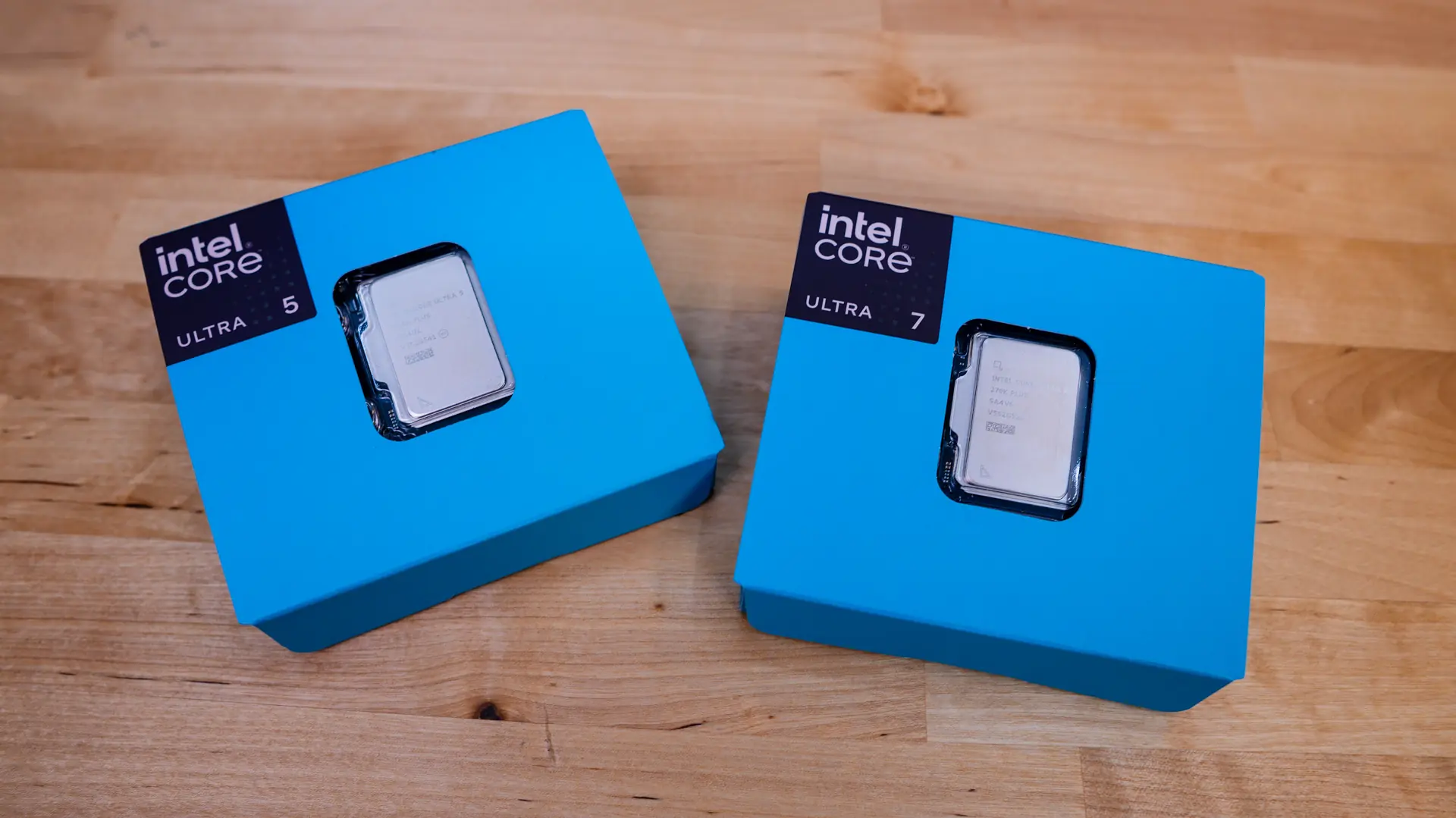
The current PC market is somewhat bleak due to a significant RAM shortage. This means that if you are planning to build a new system, you will likely face costs much higher than usual. However, sales of PC components have dropped significantly, so what are major brands like Intel doing to stay competitive? For their latest generation of processors, they have developed the Arrow Lake-S platform and launched these processors at quite competitive prices. In this review, we will discuss the Intel Core Ultra 7 270K Plus and Intel Core Ultra 5 250K Plus. Consider this a comparative review aimed at finding out which of these processors is more suitable for today's workloads and games.
Intel Core Ultra 7 270K Plus – Details
The Intel Core Ultra 7 270K Plus will be a 24-core processor. It consists of 8 performance cores and 16 efficiency cores, meaning you get an increase of 4 efficiency cores compared to the Core Ultra 7 265K. Additionally, you will see a boost clock increase with a 100 MHz boost on the P-cores (up to 5.5 GHz). The L3 cache is also upgraded from 30 MB to 36 MB. What is really interesting is Intel's increase of die-to-die frequencies by 900 MHz, which connects the computing and SoC chips. This could be a secret formula since the faster communication is while dealing with a tile-based architecture, the better it is. The Core Ultra 7 270K Plus comes with an aggressive price of $299, which is a $100 drop from the launch price of the 265K.
Intel Core Ultra 5 250K Plus – Details
The Intel Core Ultra 5 250K Plus will be an 18-core processor consisting of 6 performance cores and 12 efficiency cores. Again, it provides an increase of 4 efficiency cores compared to the previous 245K. The P-cores have a new maximum boost frequency of 5.3 GHz with a 100 MHz increase over the 245K. The L3 cache is upgraded from 24 MB to 30 MB. You will also see the same 900 MHz increase in die-to-die frequency. This chip will be launched at $199, which represents a significant reduction from the 245K's launch price of $319.
System Overview and Test Procedures
The test system we will use today consists of the following components…
Processors: Intel Core Ultra 7 270K Plus / Intel Core Ultra 5 250K Plus
Graphics Card: ASUS ROG Strix RTX 4080 Super OC
Motherboard: ASRock Z890 Taichi
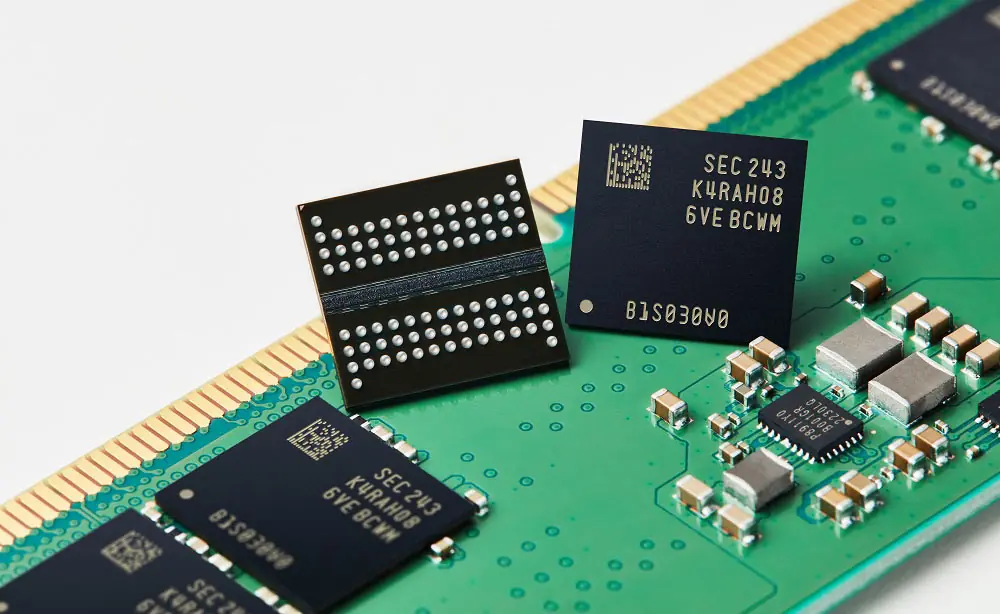
RAM: Kingston Fury Renegade DDR5-8800 CUDIMM 48GB
Storage: Patriot Viper VP4300 Lite
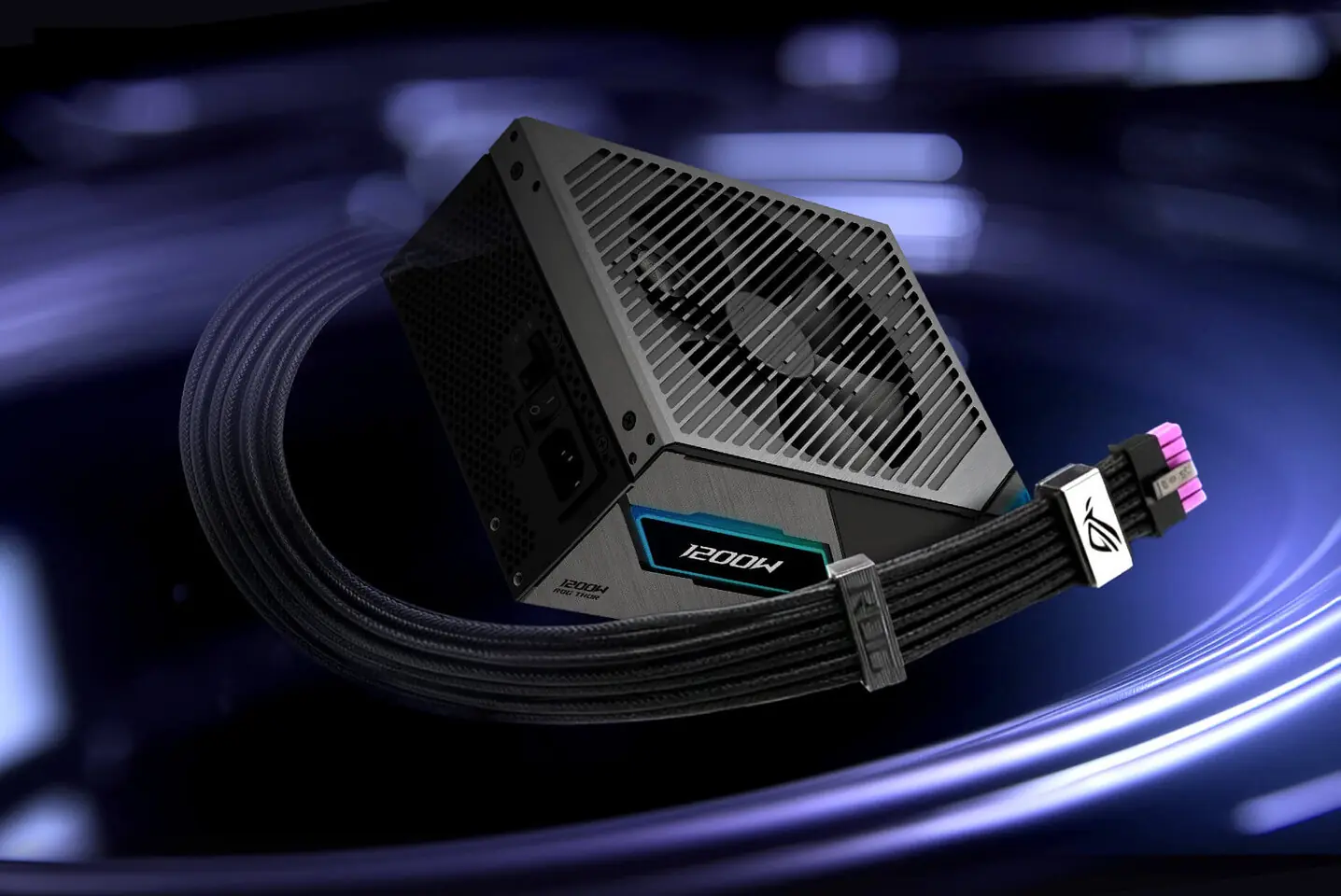
Power Supply: Seasonic Vertex GX-1200
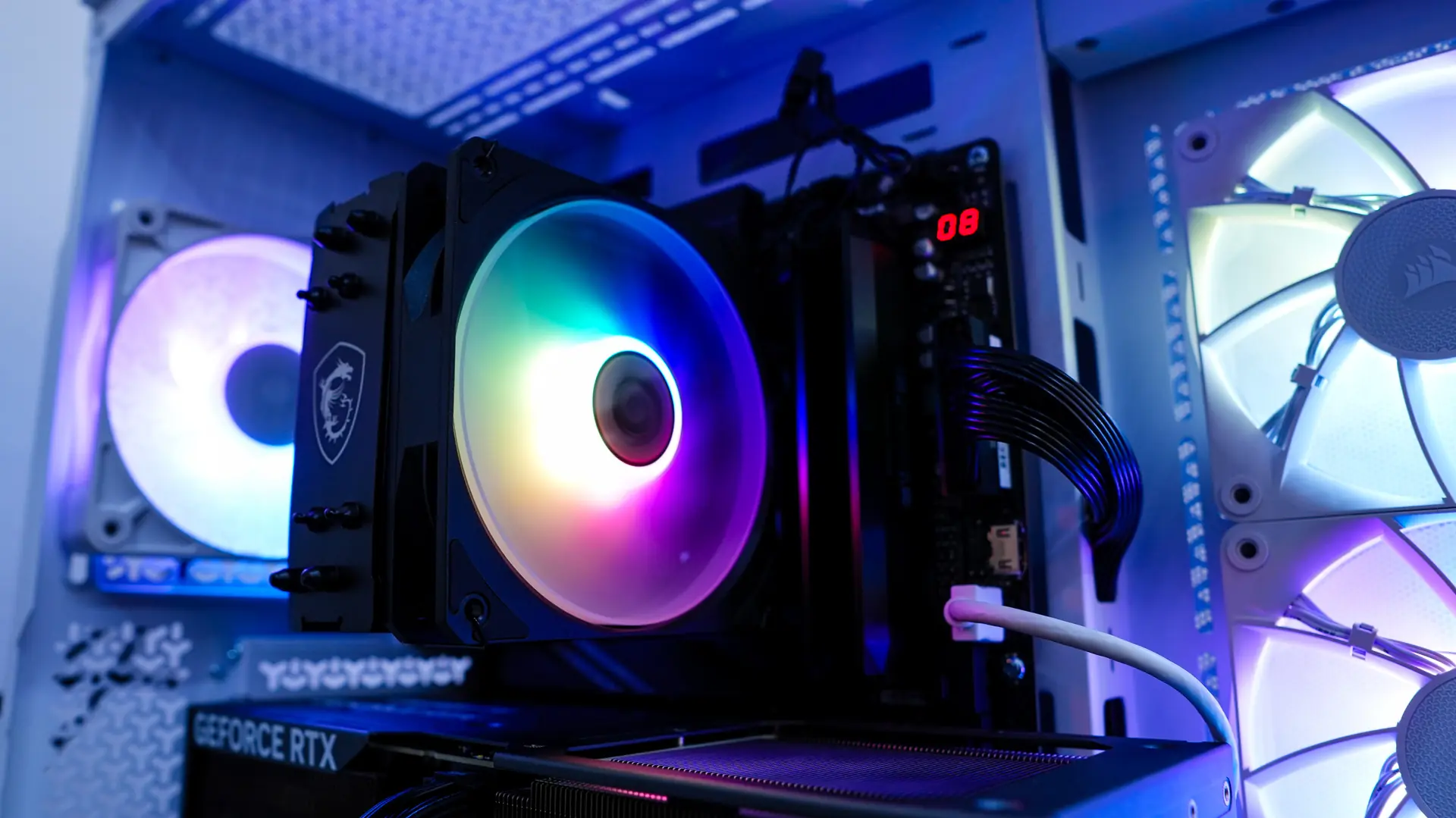
Cooling: be quiet! Pure Rock Pro 3
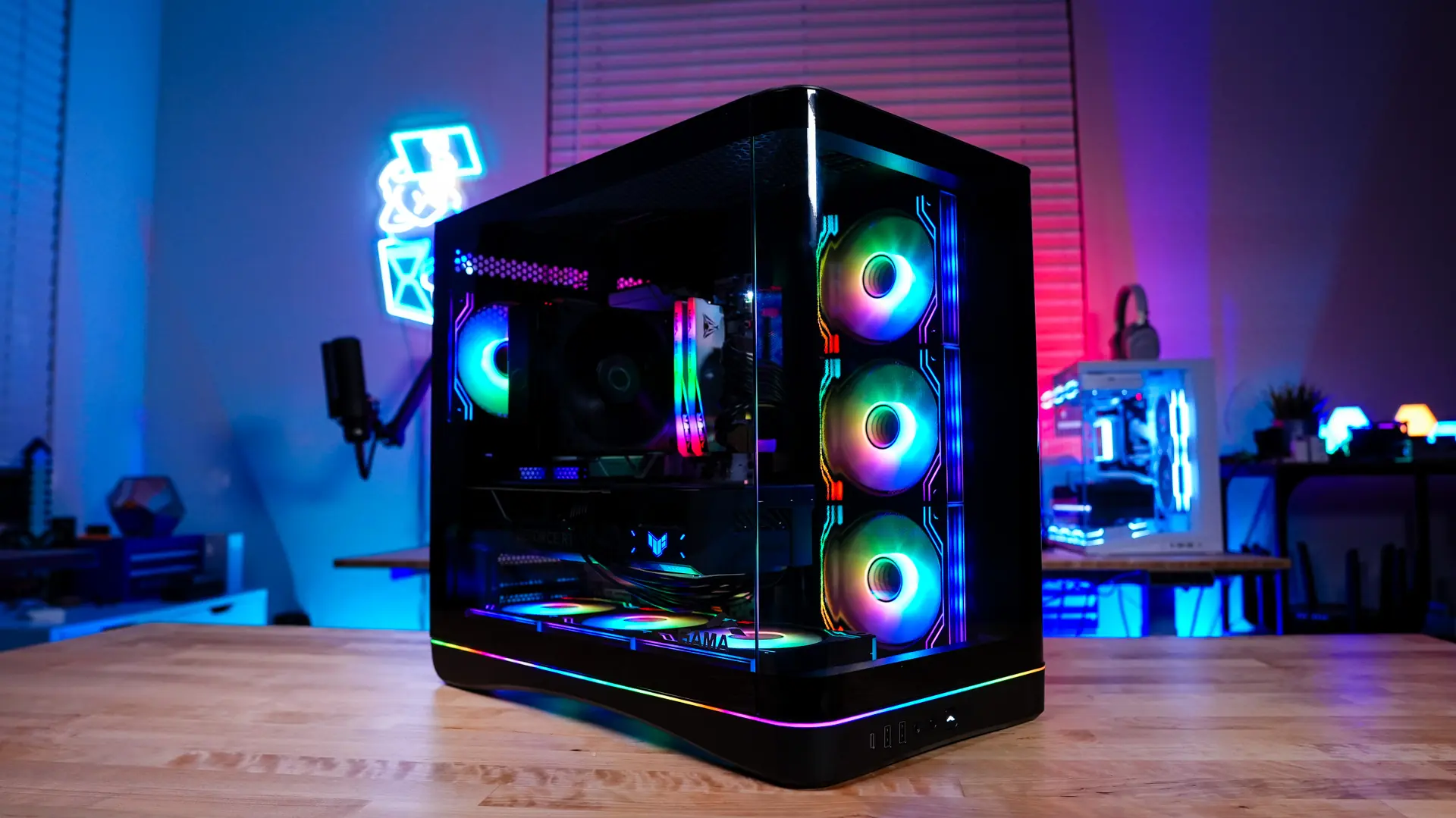
Case: BC1 Open Benchtable
We will conduct the following tests…
Synthetic Tests / Benchmarks
– CPU-Z Benchmark
– PCMark 10
– Cinebench 2026
– Blender
– Geekbench 6
– Geekbench AI
Game Tests
– Black Myth: Wukong
– Cyberpunk 2077
– F1 24
– Horizon Zero Dawn
– Metro Exodus
Synthetic Tests / Benchmarks: Intel Core Ultra 7 270K Plus and Intel Core Ultra 5 250K Plus
The CPU-Z Benchmark is a performance testing tool included within the CPU-Z software and measures a processor's capabilities by evaluating single-threaded and multi-threaded performance. It determines how efficiently a CPU manages tasks by performing a series of calculations and then assigns a score that can be compared with other processors in the database.
PCMark 10 is a comprehensive benchmarking tool developed by UL Solutions that assesses a computer's overall performance using real-world tasks instead of synthetic workloads. It tests daily activities, producing a balanced score for tasks like web browsing, video conferencing, application launching, photo editing, and document creation.
Cinebench 2026 is a CPU benchmarking tool developed by Maxon that measures a processor's rendering performance. It evaluates single-core and multi-core capabilities, producing scores by simulating complex rendering tasks.
The Blender Benchmark is a performance testing tool based on Blender that measures how efficiently a system manages 3D rendering tasks. It runs standardized scenes and records how quickly the CPU or GPU can complete them.
Geekbench 6 is a cross-platform benchmarking tool developed by Primate Labs that evaluates a system's overall CPU performance through various real-world-like workloads. It measures single-core and multi-core capabilities.
Geekbench AI is a benchmarking tool developed by Primate Labs that measures how well a device manages artificial intelligence and machine learning workloads.
Black Myth: Wukong Performance
Black Myth: Wukong is an action role-playing game developed by the Chinese studio Game Science and was released in 2024. The game is inspired by Chinese mythology, particularly the classic novel Journey to the West, and follows the story of the legendary Monkey King, Sun Wukong. Players embark on an epic journey through a visually stunning world filled with both human and mythological enemies by controlling the character.
Black Myth: Wukong has its own benchmarking tool. We set the quality level to Cinematic and enabled DLSS, FSR, or XeSS at 50% frame generation.
Cyberpunk 2077 Performance
Cyberpunk 2077 is an open-world action role-playing game developed by CD Projekt Red and was released on December 10, 2020. Set in the dystopian Night City, the game offers players a vast, futuristic urban environment to explore. The game allows for deep character customization and presents a branching story depending on player choices. Cyberpunk 2077 was built using the REDengine 4, designed to support large-scale open-world games. Despite having a controversial launch due to technical issues, the game has received many updates and improvements and has established a significant place in the science fiction RPG genre.
Cyberpunk 2077 has its own built-in benchmarking tool. We are using the Ultra preset and turning off resolution scaling and ray tracing.
F1 24 Performance
F1 24 is a racing simulation game developed by Codemasters and was released on July 25, 2024. The game offers an incredibly realistic Formula 1 experience, featuring all official teams, drivers, and circuits from the 2024 FIA Formula One World Championship. The game provides players with a more immersive racing experience with improved graphics, enhanced physics, and refined artificial intelligence. Built on the Ego engine, F1 24 supports many racing games with smooth visuals, realistic vehicle handling, and a dynamic weather system that affects racing conditions. F1 24, focused on realism and various game modes, is designed for both casual players and passionate racing fans.
F1 24 has its own benchmark mode. Here, we use the Ultra High preset at the Bahrain circuit.
Horizon Zero Dawn Remastered Performance
Horizon Zero Dawn is a game released by Guerrilla Games in 2017, and its remastered version continues to impress players with stunning visuals and an immersive open-world experience. The remastered version is built on the powerful Decima engine and ensures improvements in graphics, performance, and overall fidelity. It brings to life a post-apocalyptic world filled with robotic creatures and lush environments.
Horizon Zero Dawn Remastered has its own built-in benchmarking tool. We are using the Very High preset.
Metro Exodus Performance
Metro Exodus Enhanced Edition was released for PC on May 6, 2021, offering a significant graphical update over the original Metro Exodus. This version includes improved ray tracing effects, enhanced lighting, and higher-quality textures. Built on the 4A Engine, it comes with NVIDIA's DLSS (Deep Learning Super Sampling) support. The game maintains the same immersive post-apocalyptic story and vast open-world exploration while offering players new graphical enhancements.
Metro Exodus Enhanced Edition has its own benchmarking application. Here, we use the Ultra preset with ray tracing set to high and DLSS turned off.
Power Consumption and Temperatures
Power consumption is certainly very important for a system. Idle readings are taken on the Windows 11 desktop, and load readings are taken while running AIDA64's system stability test. We use the CPU Package reading in AIDA64.
I conducted the same test for temperatures, but I took the CPU temperature reading in AIDA64.
Final Thoughts on Intel Core Ultra 7 270K Plus and Intel Core Ultra 5 250K Plus
This review was quite enjoyable! It’s the first time we are comparing two similar processors. One of the biggest questions for first-time system builders is, “Will a mid-range processor be enough for me?” These two processors we tested really answered that question. It really depends on what you plan to do.
If you are just going to play games, the Core Ultra 5 250K Plus will definitely do the job for you. In our tests, most of our game benchmarks are nearly identical, and this holds true for 1080P, 1440P, and 4K resolutions. You won’t notice a difference when gaming with either the Core Ultra 5 250K Plus or the Core Ultra 7 270K Plus.
However, if you want to do anything beyond just gaming, the Core Ultra 7 270K Plus is clearly the winner here. You get more cores, which makes tasks like streaming, photo and video editing, and multitasking better, as most of these applications are designed for high-threaded workloads.
Unlike previous Intel refreshes, this one seems really significant. We usually expect just a simple speed boost from Intel, but here we see additional cores, faster speeds, more L3 cache, and an increase in die-to-die frequency. Overall, it has been a much better upgrade, and to be honest, it’s an unusual situation for Intel. But we’re not complaining! A major factor in getting more from Intel has been AMD's competitiveness.
The biggest advantage of Intel with these new processors is the price. Intel has been quite aggressive in pricing these two processors, even compared to its own lineup. The Core Ultra 7 270K Plus is $100 cheaper than the Ultra 7 265K (at $299), and the Core Ultra 5 250K Plus is $120 cheaper than the Ultra 5 265K (at $199). There are also really attractive package deals currently available for motherboards and power supplies.
This will be the end for Arrow Lake-S, but it’s great to see Intel on the right track and giving gamers and enthusiasts what they want!




















Comments
(5 Comments)