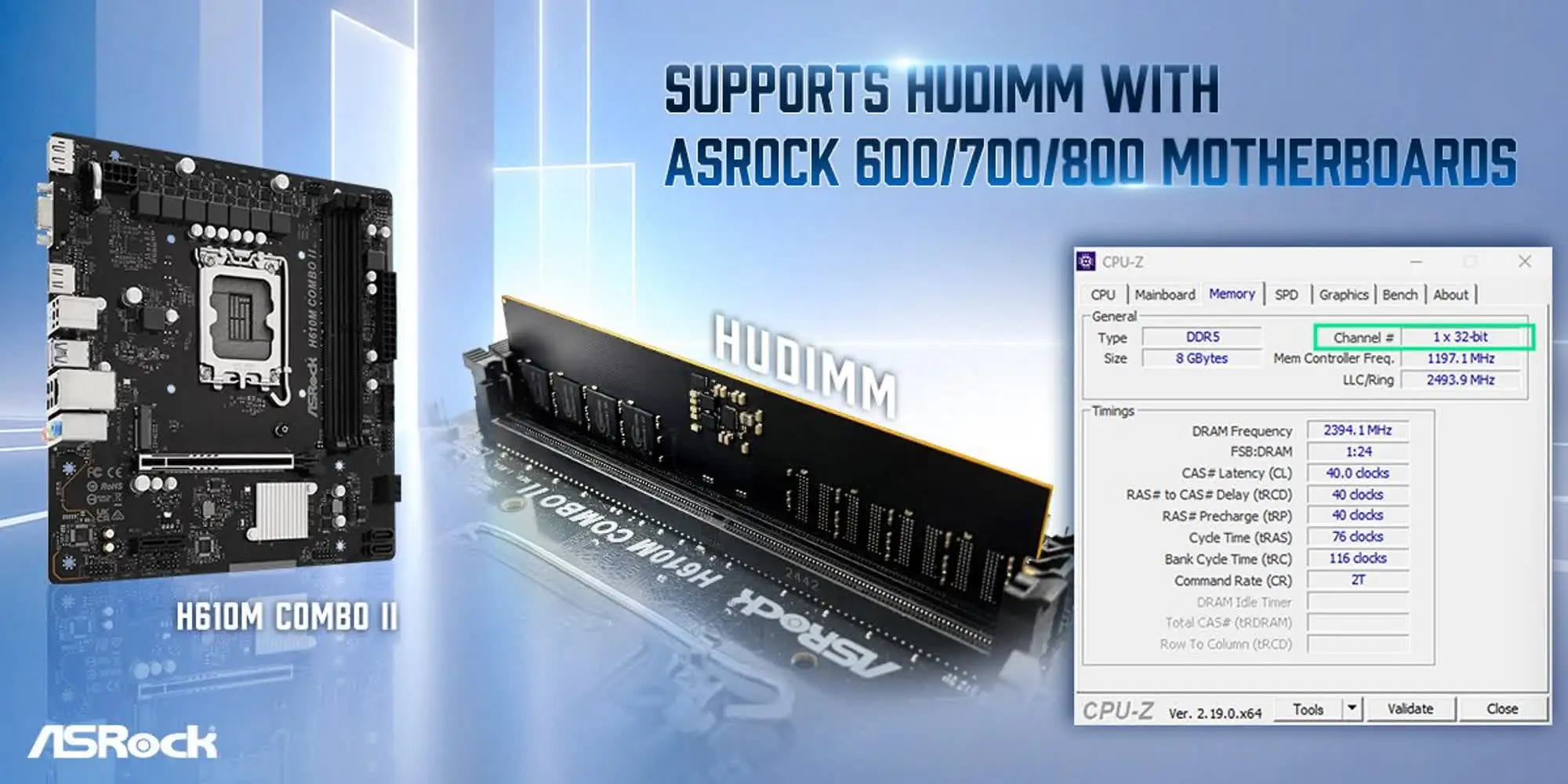
ASRock has introduced a new memory standard called HUDIMM (Half Buffered DIMM) aimed at reducing the cost of DDR5 memory. This innovation seeks to provide a more affordable option for entry-level PCs and business desktops during times of memory shortages and price increases. The new standard reduces bandwidth and density by using a single 32-bit sub-channel instead of the typical two, while also significantly lowering production costs.
Main Points
- Cost Reduction: The single sub-channel design of HUDIMM halves the bandwidth and density while also reducing production expenses.
- Target Audience: Designed for budget-conscious users and business desktops that require a modern platform.
- Compatibility: Works with ASRock's Intel 600, 700, and 800 series motherboards through BIOS updates.
- Mixed Usage: Can be combined with standard UDIMMs for asymmetric capacities and potentially enhanced bandwidth.
- Mini-PCs: A similar standard called HSODIMM has been developed for ASRock's Deskmini series.
HUDIMM Standard Explanation
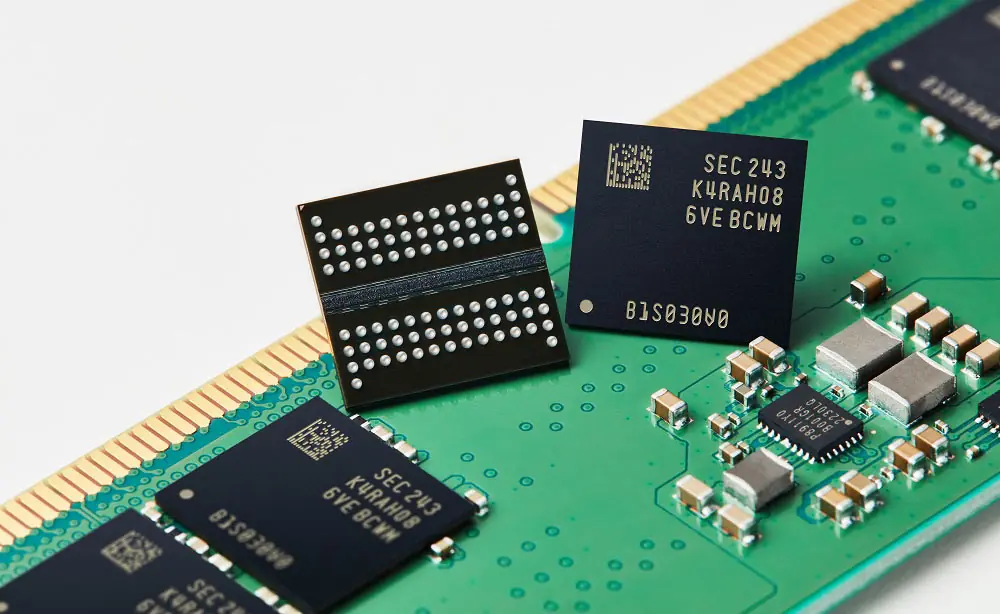
Standard DDR5 UDIMM modules have two independent 40-bit sub-channels that provide higher bandwidth and density. However, ASRock's HUDIMM variant uses only one of these 40-bit sub-channels. This reduction in the number of sub-channels means that a HUDIMM module will operate at half the rated bandwidth compared to a traditional UDIMM, even at the same clock speed, and its density will also be halved.
Meeting Market Needs
The introduction of HUDIMM comes at a time when memory prices have been rising, creating a "DDR5 memory shortage." This initiative, developed by ASRock in collaboration with Team Group, aims to provide a more accessible entry point into the DDR5 ecosystem. This step is particularly beneficial for system integrators and businesses looking to build cost-effective machines for everyday tasks such as emails and spreadsheets.
Flexibility and Compatibility
One of the notable features of HUDIMM is its ability to be combined with standard UDIMMs. This allows for asymmetric memory configurations, such as combining an 8GB HUDIMM with a 16GB UDIMM to achieve a total of 24GB. ASRock suggests that such combinations could offer improved bandwidth by utilizing at least three DDR5 sub-channels.
ASRock has confirmed that the HUDIMM will be supported by Intel 600, 700, and 800 series chipset motherboards through UEFI firmware updates. Additionally, a similar standard developed for ASRock's mini-PCs, called HSODIMM (Half Buffered Small Outline DIMM), targets the mobile desktop platform.
Wider Impacts
While the reduced bandwidth of HUDIMM may not appeal to performance enthusiasts, it addresses the critical need for affordable solutions in the consumer and business desktop markets. Intel has acknowledged the importance of such cost-effective solutions to ensure the accessibility of platforms amid rising memory costs. ASRock is actively working with memory manufacturers to increase the availability of these single sub-channel modules.















Comments
(1 Comment)